
Bath Township Neighbor Records
Start with a single Bath Township address and choose sources by what each one actually records. County mapping is the way to see nearby parcels. The Fiscal Office property record provides owner-of-record, parcel, site address, and tax context for a selected parcel. Voter tools are person-driven and subject to exclusions. Historical directories can give printed entries for a particular volume, while public organization pages offer contact points rather than household membership. No source below is a complete block roster.
| Block source | What it can show nearby | Access and boundary |
|---|---|---|
| Summit GIS Parcel Viewer | Selected parcel shapes, owner name, parcel ID, and site address | Free viewer; pan and click each contiguous parcel |
| Fiscal Office property search | Owner of record, parcel, site, mailing, ZIP, and tax-year context | Free public search; owner is not necessarily an occupant |
| Recorded deeds | Parties and legal descriptions for each parcel's title trail | Separate parcel chains, not an automatic street report |
| Board of Elections individual lookup | A named elector's available public registration detail | First and last name, not address-only browsing |
| BOE Street Report Generation | A distinct official street-report route | Recheck the live output or make a defined request; protections apply |
| ASCPL directories and criss-cross material | Historic printed address-to-name entries when a volume covers the area | Digitized collection or research-room path; no continuous Bath run |
An owner can be a trust, estate, company, or person who receives mail elsewhere. A site address marks the physical parcel, while the owner mailing address is the tax account's contact address. Neither field tells you who occupies every home on the block. Keep that distinction clear before comparing a parcel result with a name-based record.
Bath Township Neighbors in GIS
The official County of Summit GIS Viewer opens as a Parcel Viewer and accepts a parcel number, owner name, or street address. Its selected-parcel configuration supplies Owner Name, Parcel ID, and Site Address. Map layers and measurement tools can help orient the search, but the viewer is not a legal survey and its measurements do not settle a lot-line question.
The research did not find a documented button that creates a buffer of every neighbor around a property. The accurate method is slower and more precise: select the subject parcel, pan or zoom to the touching parcel shapes, click each feature one at a time, and record the owner, parcel ID, and site address shown for that selected feature. A shared road name does not prove that two parcels form the same immediate block.
Note: Use GIS to identify adjacent parcels, then use the selected parcel's own record trail rather than copying a name from the map into a household claim.
Bath Township Neighbor Voter Rules
The Summit County voter form is an individual lookup. It requires Last Name and First Name and does not offer a public address-only browse. When a lawful, named-person check is appropriate, the public detail can show the name on file, residence address, mailing address, year of birth, party notation, and voting history. It does not display ballot choices, and a single result is not evidence about other people at the address.
The Board's Candidate and Voter Tools list Voter Report Generation and Street Report Generation as separate functions. That distinction matters for Bath Township neighbors. Review the current official report form, its available fields, and protected-record exclusions before requesting a defined report. The Board's public-record channel also permits a clear request or inspection of an existing record; it is the proper fallback when the name form does not answer a narrow, lawful question.
Ohio keeps a line between information stored in its voter database and fields that may appear on a public site. Full or partial Social Security information, state identification details, telephone, email, confidential registrations, and qualifying protected worker addresses are excluded. The Ohio voter-record exclusions statute is the relevant starting point for that limit.
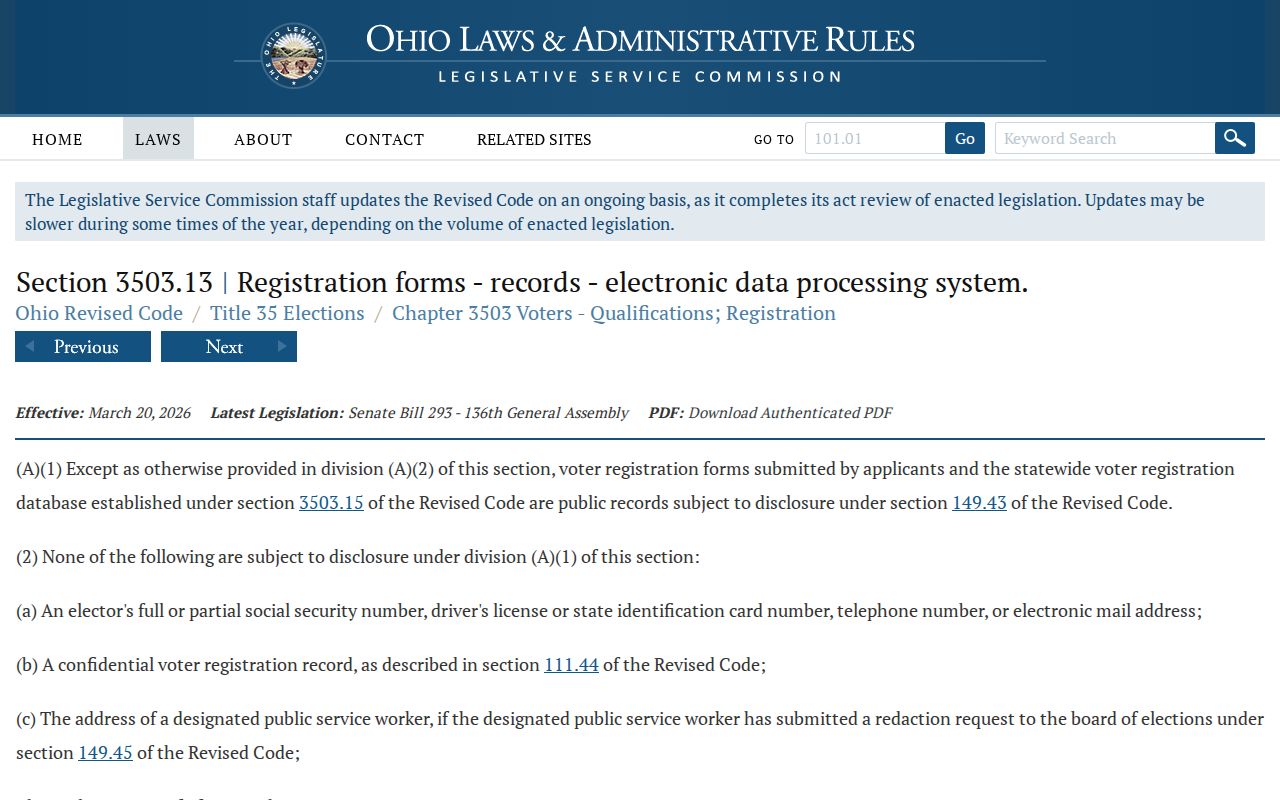
Those exclusions mean a missing entry should never be treated as proof that a person is absent from Bath Township.
Map a Bath Township Block
Use a parcel-to-parcel process when the goal is to understand the immediate area around an address. It keeps the work tied to the land record and avoids turning a street name into an unsupported list of neighbors. For older land relationships, the current parcel's legal description is the bridge to the Recording Division, where web documents begin in 1988 and the Index Book Archive Viewer covers 1840 to 1988.
- Enter the subject address in the GIS Viewer or use the Fiscal Office Property Search to locate the exact parcel.
- Record the subject parcel ID, site address, displayed owner, selected tax year, and legal-description clues before moving to nearby parcels.
- Pan to contiguous parcel shapes and click them individually. Retain each selected parcel's owner, parcel ID, and site address as separate records.
- Use a deed or legal description only for that parcel's own title chain. A document party is a transaction participant, not a guaranteed occupant.
- When the question extends down an entire named road, use the Bath Township street directory workflow instead of repeating block-level clicks.
This path can explain how parcels relate around a Bath Township address. It cannot confirm a person's move-in date, utility account, delivery information, or every adult who may live there.
Bath Township Community Contacts
Community organizations can be useful for public event information, local history, and voluntary contact routes. They are not a substitute for a resident roster. Research found no authoritative township-wide HOA or neighborhood-household directory. The Bath Business Association's public directory is for businesses and community organizations, and its mention of a Township directory lacks a verified date, edition, publisher, or public access location. Treat that as a reason to contact the Association, not as evidence of a current neighbor list.
| Public contact point | Useful public role | What it does not establish |
|---|---|---|
| Bath Township Fiscal Officer | Township records requests, fiscal documents, and local meeting material | Every resident at an address |
| Bath Business Association | Business and community organization directory information | A public membership or household roster |
| Bath Homeowners Association and Bath Volunteers for Service | Organizational contact and newsletter material | Membership or residence proof |
| Summit County Historical Society | Historic local context and collections held at ASCPL | Current neighborhood identity |
The Township Fiscal Officer page is the official contact route for the Township's own records and public-record requests.
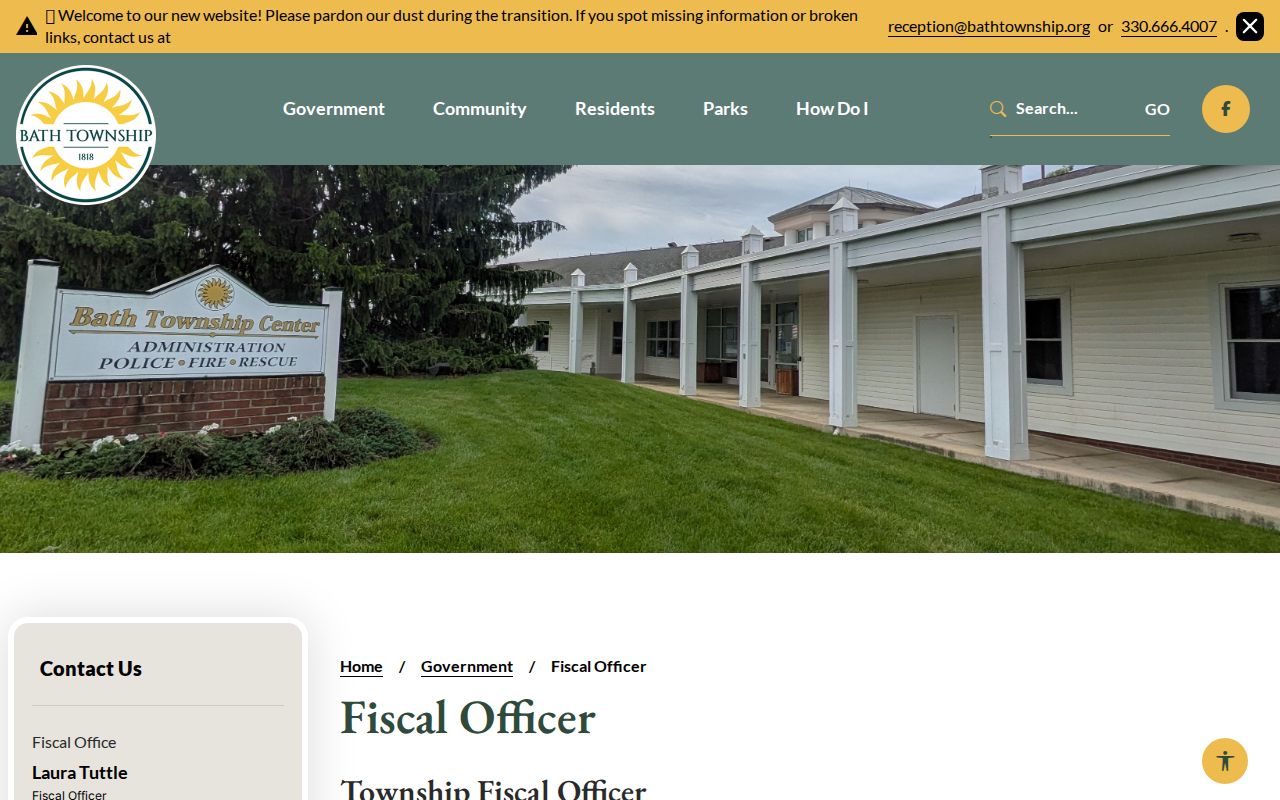
For an address-specific township document, request the existing notice, case, minutes, or fiscal record by its date, address, parcel, or case number instead of asking staff to create a list.
Historic Bath Township Neighbors
For a block's earlier story, ASCPL Special Collections is the local fallback. Its Historic City Directories description says that most city directories contain a street-directory section listing residents and businesses by address. The online Akron and Summit County directory collection has specified digitized volumes between 1859 and 1969, while the library also lists Akron city-directory microfilm from 1871 to 1978. These are real resources, but their geographic coverage and surviving years must be checked volume by volume before applying a printed address to Bath Township.
Use the exact edition image, title page, and abbreviation guide. A historical criss-cross or street section can show a printed name at an address for that edition, but it cannot fill gaps between volumes or prove current residence. When a historic address uses a hamlet or a different postal label, compare its legal description or map context before matching it to a modern parcel.
The Summit County Historical Society collection information explains that its archival records and photographs are held at ASCPL Special Collections.
That collection route supports dated local context, not a present-day list of neighbors.
Bath Township Neighbor Sources Compared
Official and commercial sources are different categories with different strengths. County sources identify the parcel, record owner, court party, or legally available voter detail behind a defined question. Commercial tools may combine public and commercial material, but the research warns that such matches may be stale, incomplete, or assigned to the wrong person. Neither category overrides the other record's date, access rule, or missing-field limit.
| Source category | Best use around a block | Key caution |
|---|---|---|
| Official parcel and deed records | Identify a selected parcel, owner-of-record, legal description, and dated title event | Owner and transaction party are not automatically occupants |
| Official voter and court channels | Check a defined named-person or case question within the published rules | Person-driven forms and protected-record limits apply |
| Commercial people-finding category | At most, a lead to verify with a custodian | Records can be stale, mismatched, or incomplete |
| Library and historical collections | Find a printed, dated address observation or local context | Volume scope and time gap must be preserved |
For a contested or important fact, return to the government office or library holding the source. A current parcel selection, an exact directory page, and a date are more useful than a broad, unsourced list.
Bath Township's Public-Field Myth
It is easy to assume that every field held in a government database can be searched or displayed online. Ohio voter records show why that is wrong. The statewide system can hold administrative information that the public website is not allowed to reveal. Public output is limited by statute, while confidential registrations and protected addresses stay out of public results. A block search becomes less accurate, not more accurate, when those deliberate limits are ignored.
The same caution applies to property, court, and township material. A public notice may list an applicant or an owner connected to a project, but it does not establish every current neighbor. A parcel mailing address can differ from the situs. Public does not mean complete, current, or suitable for republishing as a personal profile.
Bath Township Neighbor Privacy
Ohio Safe at Home provides a substitute address for qualifying people who fear for safety and can protect voter-registration data and certain real-property records through a confidentiality notice. Its participants must not be treated as ordinary search failures. Ohio also limits online disclosure of Social Security numbers, tax identifiers, driver or state identification numbers, and financial or medical account information. Court files, motor-vehicle material, and voter records carry their own additional restrictions.
A resident may use the Attorney General's process under ORC 149.45 to identify a protected identifier that appears online. That route is distinct from Safe at Home and from correcting a government record. It does not erase every historical document or make a private data source public. Utility and delivery information are not public neighbor-search channels.
Lawful use. Use Bath Township neighbor records for personal, lawful research, local history, or safety awareness. Do not use any result to watch, stalk, harass, threaten, or intimidate another person.