
Bath Township Historical Directory Collections
Bath Township does not have a proven, separate annual municipal directory run. The reliable historical shelf is the Akron-Summit County Public Library Special Collections, where the Historic Directory Collection brings together Akron and Summit material. A Bath Township historical-directory result is useful only after the researcher checks the title page, edition, publisher, and geographic coverage of that exact volume. A missing Bath name in an Akron-focused edition does not prove that the person was absent from the Township.
| Collection | Stated years | Where held | How it is used |
|---|---|---|---|
| Online Akron and Summit directory volumes | 1859–1969 statement, with listed digitized editions | ASCPL Historic Directory Collection and its Internet Archive collection | Full-text search, page image, and street-directory checks |
| Akron city-directory microfilm | 1871–1978 | ASCPL Special Collections | On-site volume check when a digitized year is absent |
| Akron and vicinity telephone directories | 1914–present stated; some microfilm years incomplete | ASCPL Special Collections | Telephone-era name and address corroboration |
| Street-directory and criss-cross material | Scope varies by volume | ASCPL research room | Printed address-to-name observations where the edition covers the place |
The online dates and microfilm dates describe two formats, not a promise of one uninterrupted annual Bath Township directory. The digitized list includes 1859, 1868, 1875, 1877–78, 1882–83, 1886–87, 1888–89, 1892–93, 1893–94, 1896, 1897, 1900, 1904, 1908, 1912, 1916, 1920, 1926, 1933, 1939–40, 1948–49, 1956–57, and 1964–65. Record the actual edition chosen, then treat years not listed as gaps until the library confirms a volume.
Bath Township Directory Years Online
The collection directs multi-volume searching to the Akron and Summit County directories at Internet Archive and instructs readers to use its text-search option. For a Bath Township surname, a distinctive Bath Township street name, or an organization, open the scanned page rather than relying on optical character recognition alone. Narrow columns and initials often scan poorly. A printed page is the evidence to preserve, especially when the spelling differs from a later record.
The ASCPL genealogy page describes online Akron directory coverage from 1859 through 1969, while the microfilm listing reaches 1978. Those statements work together for Bath Township research. They do not establish that every Bath Township address appears in every Akron edition. For a historical address, retain the directory title, publisher, volume year, printed page, and the location wording used by the volume before comparing it with a modern parcel.
Note: A full-text hit is a fast lead, but the scanned image and the edition's coverage statement are the record worth citing.
Bath Township Directory Desk Access
Special Collections is on the Main Library's third floor at 60 South High Street, Akron, OH 44326. The division's phone number is 330-643-9030. Stated hours are Monday through Thursday, 10 a.m. to 8 p.m.; Friday, 10 a.m. to 6 p.m.; Saturday, 10 a.m. to 5 p.m.; and Sunday, 1 p.m. to 5 p.m. Closed-stack and archival items should be requested ahead. Same-day archive requests are unavailable after 5 p.m. and on Sundays, so a historical directory search that needs microfilm or archival support benefits from an early visit.
The ASCPL Local Records guide also points to deed, estate, naturalization, death, cemetery, map, funeral-home, and archival paths. That makes the desk useful after a Bath Township directory entry gives a narrow name, date, or address, not just for browsing old books.
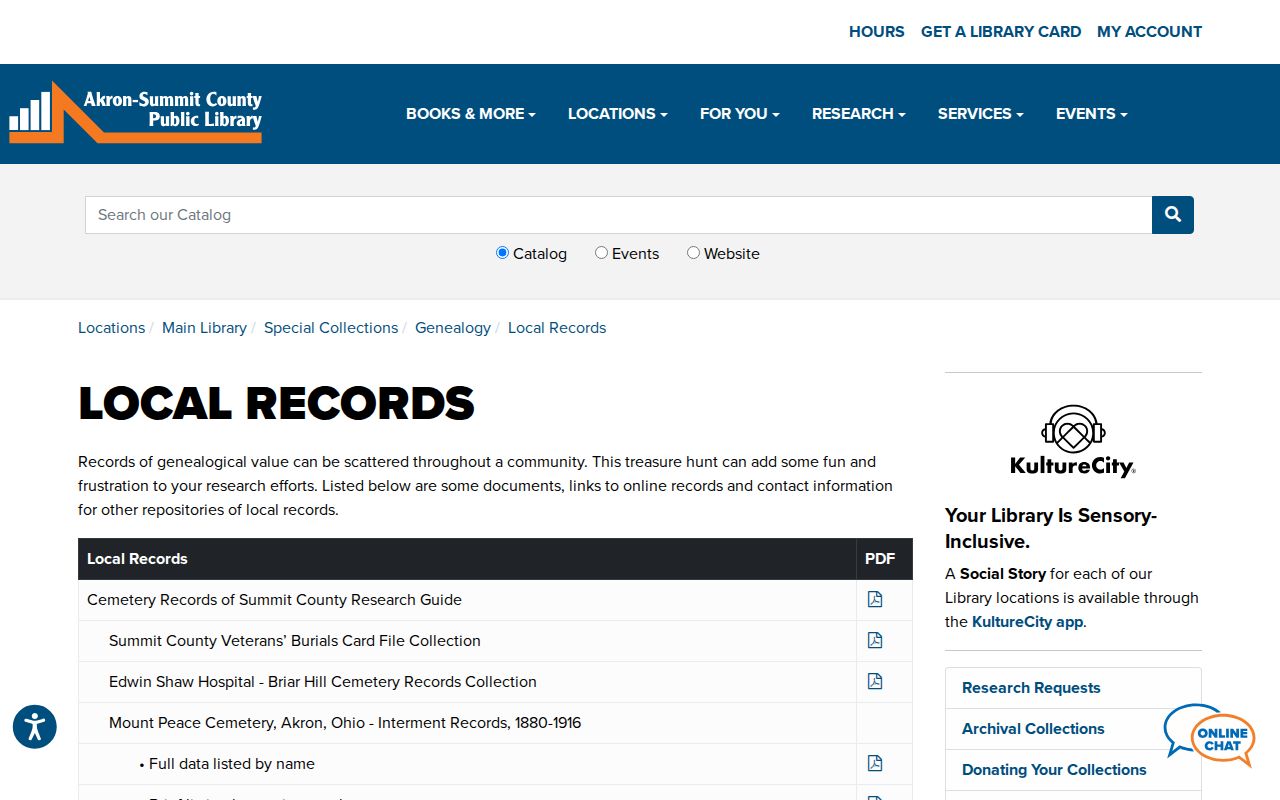
For Bath Township research, Local Records shows why a directory page can be matched to a deed index, an estate record, or an obituary index instead of being read as a stand-alone answer.
Remote Bath Township researchers can use Special Collections research requests. The library asks researchers to allow up to three weeks. Obituary, article, vital, and print requests are limited to five items per request and one request each month. Qualifying electronic items have no fee; self-service black-and-white copies are $0.05, color copies are $0.25, and scanning is free when collection restrictions allow it.
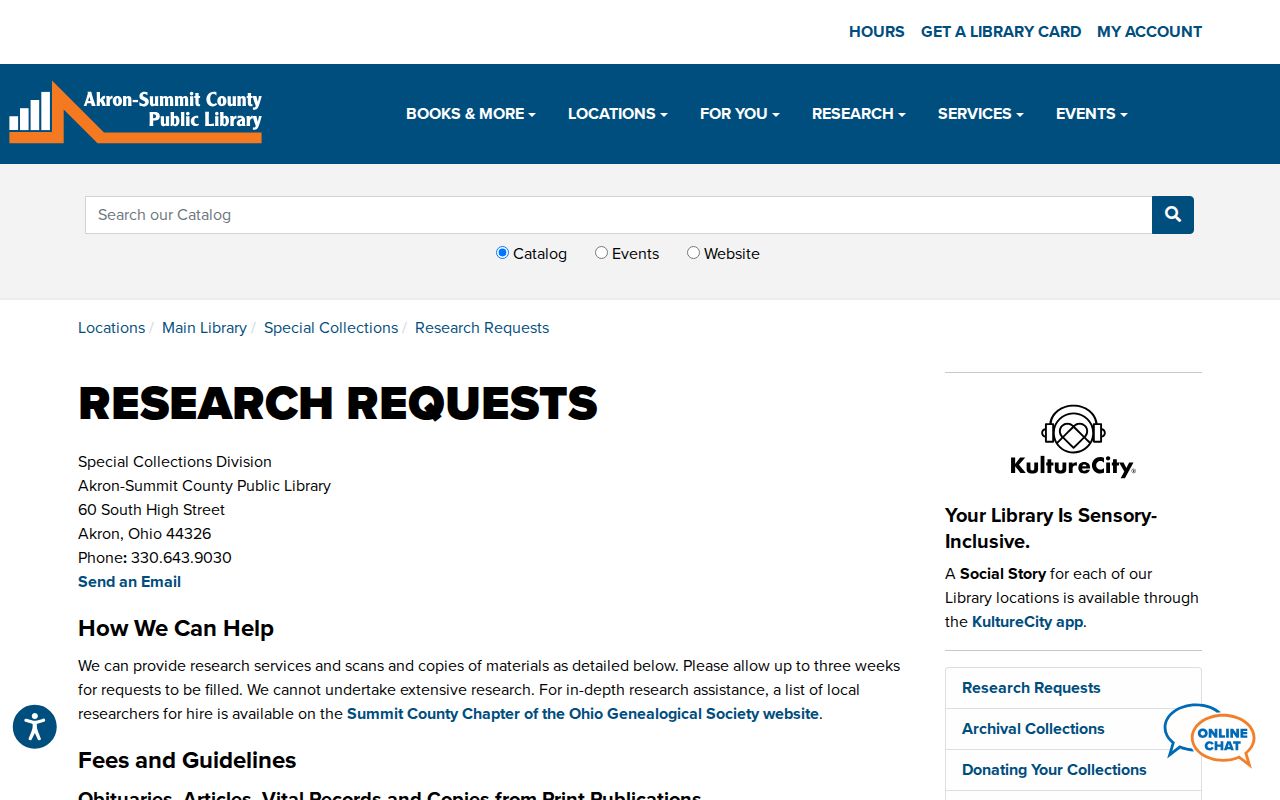
The request policy is most effective with a title, year, page, surname, or address already identified from the directory collection.
Reading Bath Township Directory Entries
Most city directories have a street-directory section that lists residents and businesses by address. It can move a Bath Township address search backward to a printed name, while the alphabetical portion can supply initials, a spouse or widow notation when printed, and a business or organization entry. The public collection description does not provide one Bath-specific abbreviation key. Read the key in the exact volume rather than applying a symbol from a different publisher or year.
| Printed name | Copy initials, surname, and spelling exactly as printed; compare variants rather than silently modernizing them. |
|---|---|
| Spouse or widow wording | Record it only when that edition shows it. It can help distinguish two people with the same surname. |
| Street and house number | Keep the historical formatting. It may differ from a later postal or parcel address. |
| Business or organization listing | Use it as a dated lead when the volume prints one, then confirm it with another source. |
| Street-directory portion | Check the address-ordered section for the printed name or business associated with that location. |
| Edition evidence | Preserve the title page, publisher, volume year, page image, and any available page permalink. |
- Criss-cross directory
- An address-ordered or street-ordered portion of a directory that helps move from a printed location back to a name or business.
- Householder index
- An alphabetical arrangement of household names when a particular volume includes one; its form varies by publisher.
- Abbreviation key
- The guide inside a specific volume that defines its shortened labels. Photograph or save it before interpreting the entry.
Bath Township Directory Maps and Names
Historic directories become more useful when a Bath Township location is placed in the time period that produced it. The public Summit Memory Map Room offers 1856 and 1874 county maps, an 1891 map and atlas, and a 1910 atlas. The 1874 atlas adds landowner and property context. Use a map label to form a question for a grantor/grantee index, then compare the result with the legal description and current parcel. A map does not itself prove title continuity or present ownership.
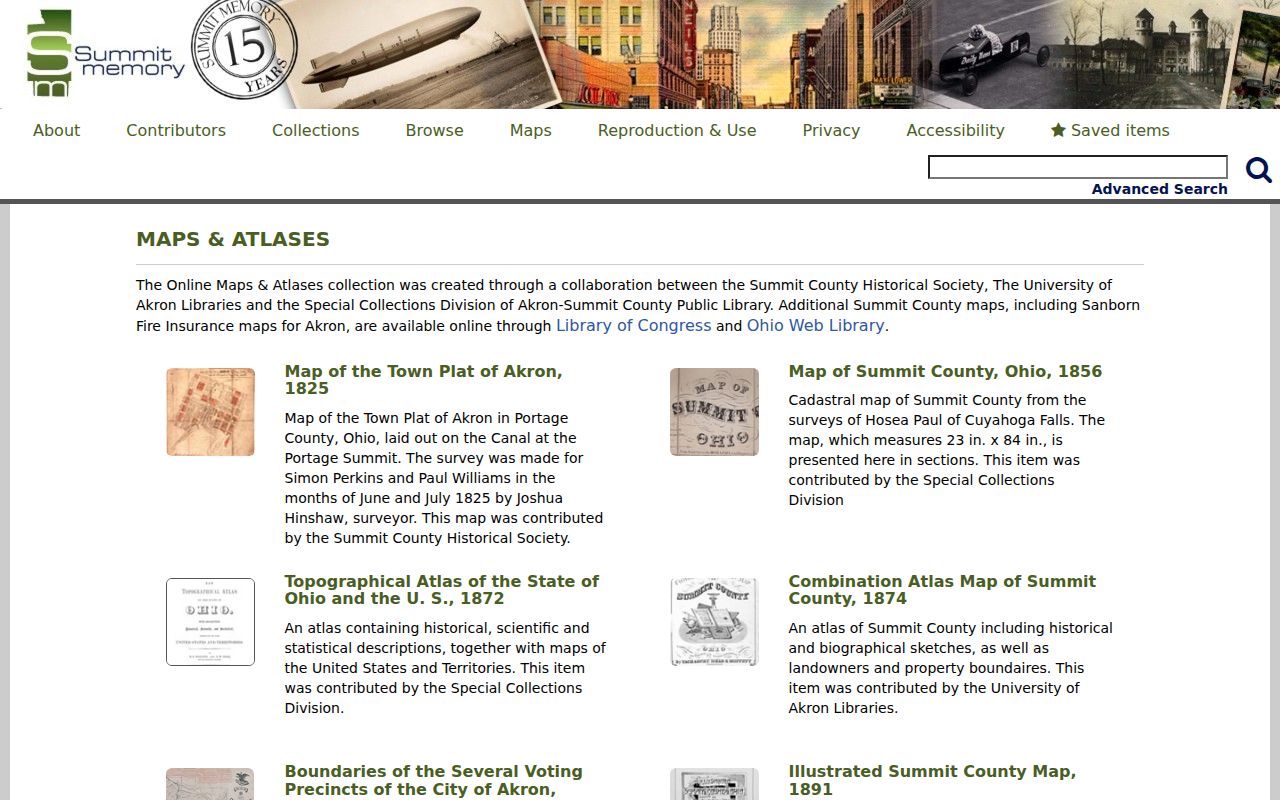
The map collection gives a geographic frame for a printed directory address, especially where an old route, hamlet name, or postal label differs from current wording.
Bath's historical materials use names such as Ghent, Bath Center, and Hammond's Corners. Ghent research also documents the Harshey and Hershey spelling variation. Search both forms and keep the source spelling in the notes. A historical directory result under an Akron, Fairlawn, Richfield, or Peninsula postal label may still need a township-boundary and parcel check before it is assigned to Bath Township.
Tracing Bath Township Directory Households
Use Bath Township directory editions as dated observations, not as a yearly roll call. Start at an edition that fits the known surname or address, confirm the printed page image, and follow the record through the next surviving editions. Compare the address against a county deed or property index when the question is ownership. For a current parcel, the county-focused Bath Township street directory route supplies the modern address and parcel sequence that historical volumes cannot provide.
- Choose the earliest or latest surviving volume that fits the known name or address, and search its text before inspecting the page image.
- Read the street-directory section from the address back to the printed resident or business, then check the alphabetical portion for initials and variants.
- Repeat only across extant editions. Do not treat the space between two volumes as proof of continuous residence.
- Pair the directory observation with a decennial federal census released under the 72-year rule, keeping each source's date distinct.
- Use the Beacon Journal index, an obituary, probate material, cemetery sources, or naturalization records to test a move, death, or heir connection.
A name that disappears may reflect a move, death, changed initials, a different postal label, or that edition's inclusion rules. The address may also have been printed differently. Preserve both forms before normalizing anything to a modern mailing format. The objective is a documented sequence of observations, not an assumption that every directory omission has one meaning.
Note: Pairing a directory year with its census date gives two snapshots, not evidence that a household stayed in place between them.
Bath Township Directory Newspaper Trail
When a Bath Township directory gives a precise name and approximate period, ASCPL's Akron Beacon Journal subject indexes can extend the search. The subject index covers 1841–1939 and includes births, marriages, deaths, and articles. The obituary index begins in 1937. The library also describes the Ohio Obituary Index as a large statewide database with Akron Beacon Journal entries added daily. Each is a lead to an event or notice, not a substitute for checking the underlying record.
Access conditions matter. ASCPL labels Ancestry Library Edition for in-library use, and FamilySearch Affiliate Library access is in-library with a free FamilySearch account. Newspaper and database access depend on current library license screens. For an appointment-based records alternative, the University of Akron Archives research service identifies city directories, maps, and yearbooks, and may hold transferred local-government material.
Bath Township Directory Record Gaps
Bath Township was organized in 1818 in Medina County and became part of Summit County when Summit formed in 1840. The Township's history says its early original records were lost and identifies the 1865 trustee record as the earliest surviving officer list. That loss matters when a city directory search reaches the early period: absence from Township minutes cannot prove that a person, family, or property was absent.
For an early Bath Township question before the 1840 county change, ASCPL holds grantor indexes for Trumbull, Portage, Medina, and Stark counties from 1795–1840 where those townships later became part of Summit. Summit grantor/grantee microfilm runs from 1840–1914. Church, cemetery, atlas, and later reconstructed material may help frame the question, but each source needs its own citation and limits.
Bath Township Directory Scope Limits
A Bath Township directory search is strongest for genealogy, a historical address, a family connection, or a dated business reference. It cannot establish every person who lived at a property, every year of a household's stay, or a present-day occupant. Printed listings have their own editorial and geographic boundaries. A telephone directory is a separate series, and a deed records a transaction rather than a move date.
The Bath Township Historical Society and the Summit County Historical Society collection add local context about Ghent, Yellow Creek, Stony Hill, Bath Church and Town Hall, and Hale Farm. The historical society says its archives and photographs are physically housed at ASCPL Special Collections, with selected material in Summit Memory. Those routes can clarify a Bath Township place or family context after the directory evidence has been preserved.